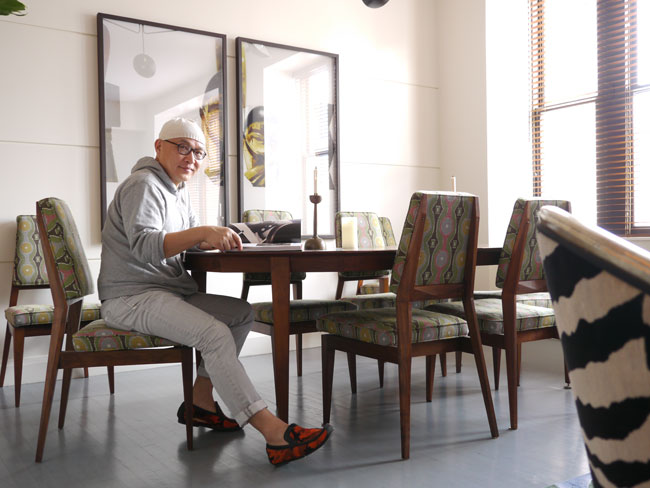
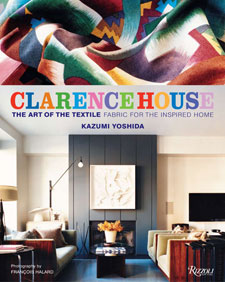
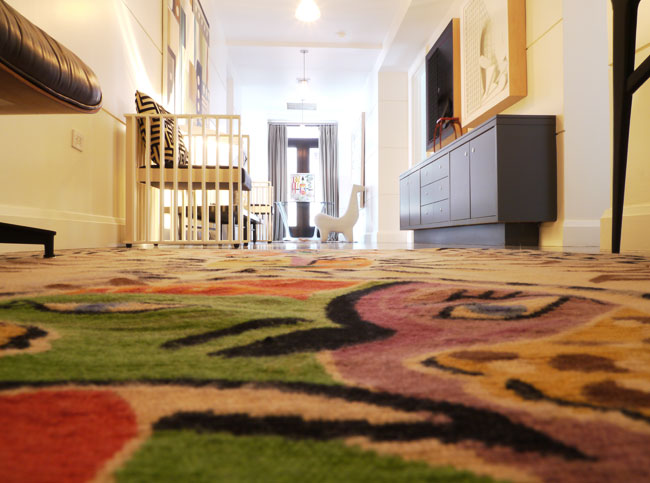
Officially Kazumi Yoshida is Executive Vice-President of Design at the decorative fabric company, Clarence House but that seems a weighty title for someone who seemed to us very easy-going, instinctively creative and humorous, even playful. Some of his designs are classics—even if you don’t know who he is you will have seen his Papier Japonais or La Palmas textiles in someone’s house somewhere. He also spends a good portion of his time making art, both sculpture and works on paper and he is currently shopping a delightful picture book manuscript as well as designing collections for Clarence House and Hermès. His new book, Clarence House: The Art of Textile (Rizzoli, $65.00), is both a visual presentation of this textile house’s fabric collections and an illumination of Yoshida’s creative design process.
I think the best place to start is with Clarence House and Robin Roberts [who started the business] How did it all begin?
Well, when he was looking for fabrics, he couldn’t find anything he liked and I think he realized that he needed to create something. And the name was like a joke – the Americans don’t know that it is this house in London.
Well, it was the Queen Mother’s house.
[Laughs] We used to say that we shopped at Clarence House in London! And we got away with the trademark or copyright. It’s amazing we got away with it.
I want to talk about textiles. Why are you drawn to designing textiles? I read that you were initially designing clothes.
Initially I wasn’t really interested in textiles. I studied architecture in London but I dropped out. I was at the Royal College of Art, studying landscape architecture right after graduating in Japan. But I dropped out after a year because there was so much fun going on. [Laughs] I met Tina Chow and we got friendly I was hanging around at Mr. Chow and Knightsbridge and all that.
Could you afford to keep up with them?
I was sort of getting money from my parents because they thought I was in school …
I became friendly with Zandra Rhodes and Christopher Gibb and the head of the British Fashion Council … I had a very nice group of friends.
Are you still friends with any of these people?
Most of them are dead.
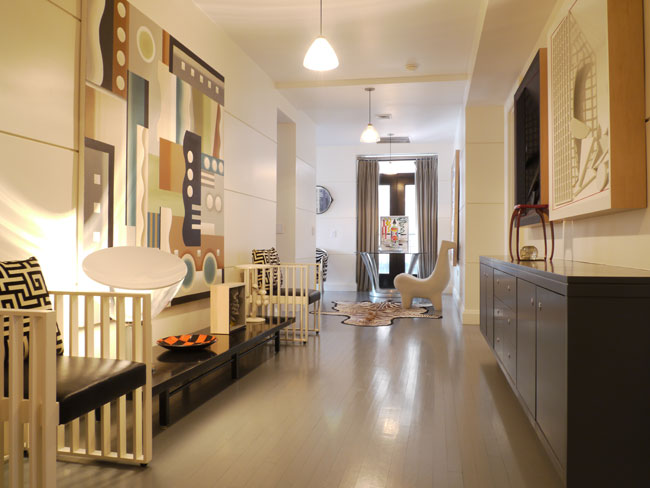

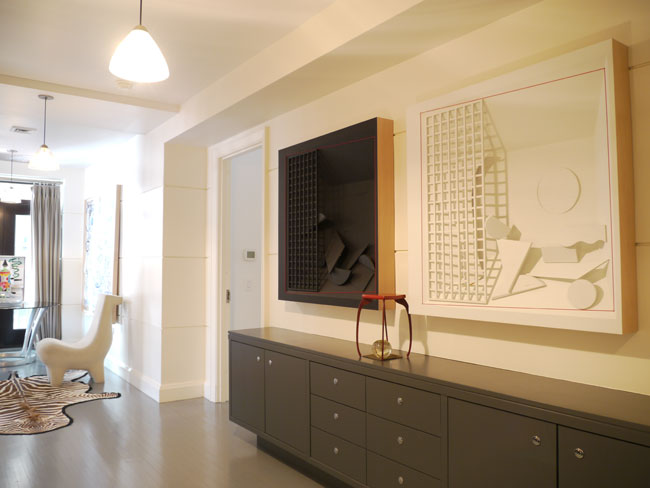
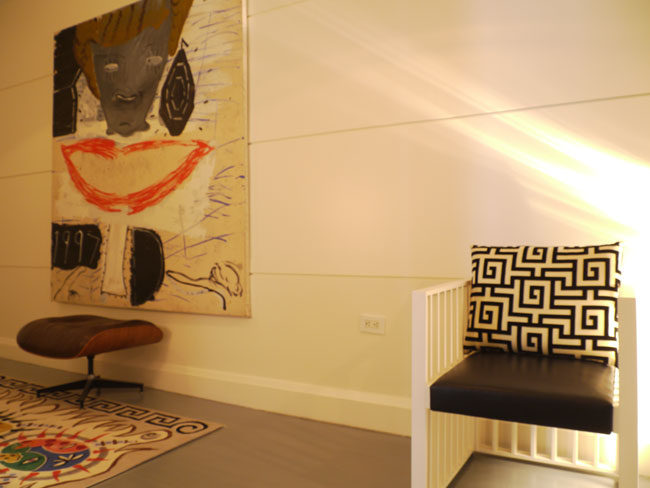

I have a friend who once interviewed Zandra Rhodes and Zandra Rhodes fell asleep during the interview.
She must be in her seventies, right?
So how did Robin [Roberts] pluck you from all this?
When I met him, we clicked like this. [snaps his fingers] He thought I was eccentric and I thought he was eccentric. We didn’t do any business in the beginning and I started showing him some sketches. He said, “Why don’t you try to do something with textiles?” I didn’t know anything about textiles but I tried. He taught me how to put in a repeat.
So you never studied formally?
No, I never did.
But textile design is such a specific skill.
It is and later on I started to learn, particularly working together with Robin. He took me to Lyons, to the factories, where I saw how things were woven. All the best of the best, he brought me to the sources to learn from scratch, all the old European houses. I blossomed! I observed everything.
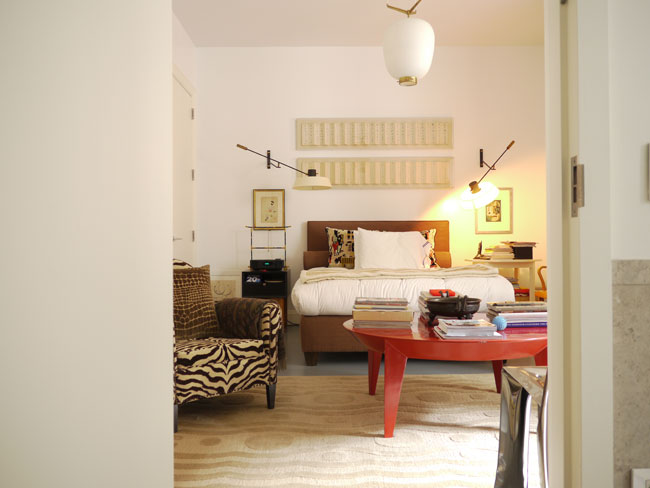



How quickly did your own designs take off?
Actually, right away. My first design was called Papier Japonais
Do you know I want to tell you that my 93-year-old stepmother and my 94-year-old father have Papier Japonais in their dining room. It’s been there for decades.
It’s a classic. It’s still in the line. Lee Radziwill used it for her apartment here but then she moved to Paris. She put bolts of fabric on the wall. She fell in love with what I do. She wanted to do a collection … but it didn’t work.
There was a line in your book that talked about “timeless design” – that your designs are timeless – I’m just curious about that … how do you know how to make a timeless design?
That’s a very difficult question. Papier Japonais is timeless. If you do a too-fifties look, too art-deco, they become dated, so if you tweak it and make it a combination of things …



Your designs are quite playful, aren’t they?
Especially my prints. I get inspired by all those artists like Léger, Picasso, Matisse …
It’s not about historical design so much for you, you stylize.
Well, yes. I remember everything. When we went to Prague, we went to the Smetana Hall, the concert hall, and I loved the fabric on the chairs and that was an inspiration for a fabric.
Do you take photographs?
No, it’s in my head. It’s in the memory.


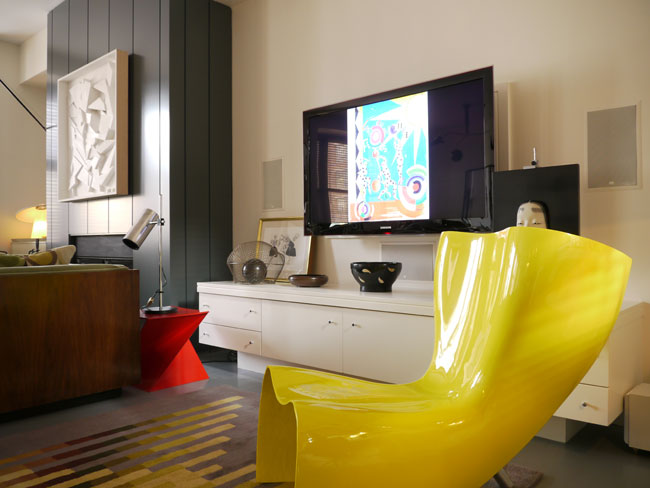

Where have you been recently that you found inspirational?
Fantastic Bahia, Brazil. I like all those colors. Color in Brazil is different, don’t you think? There’s a sort of orange color[to] the color of the sunlight and the stars look bigger.
What is popular at the moment?
What’s popular? The fifties – everywhere.
We’re done with that. We never liked it. Aren’t you tired of it?
I’ve started creating sort of sixties and seventies … things that are bolder. I’ve never liked chintz.
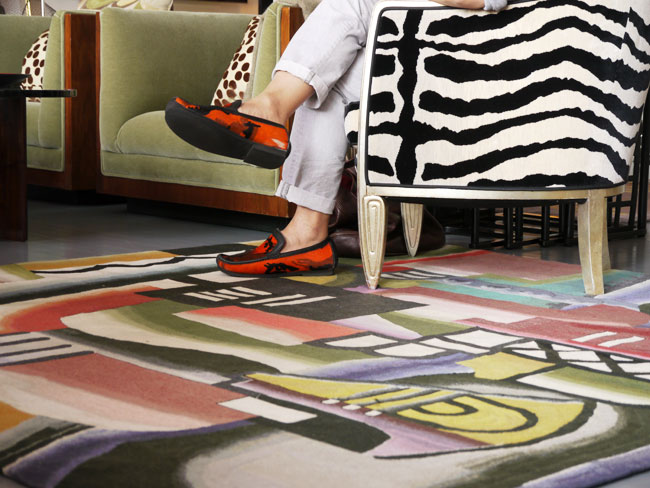
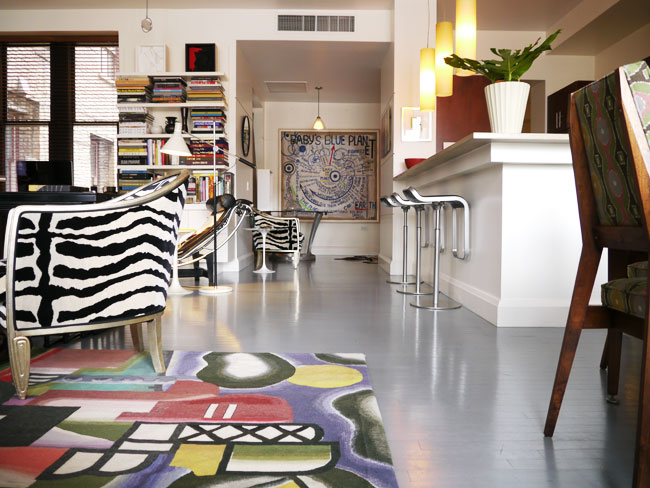
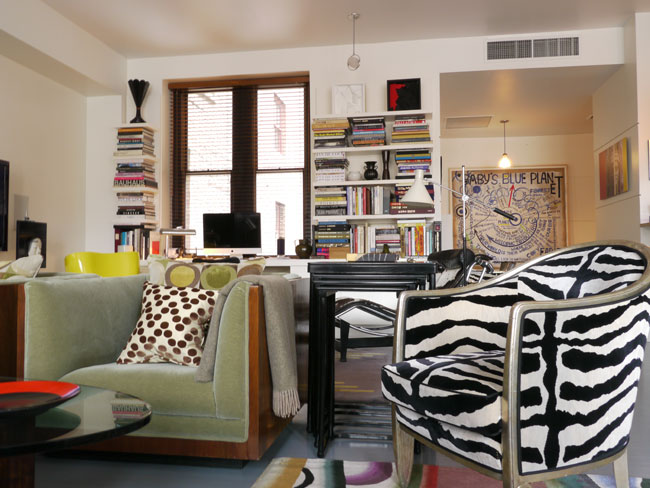


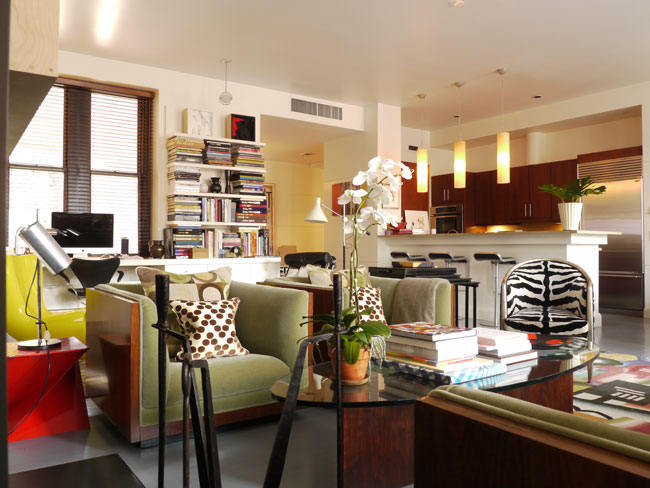
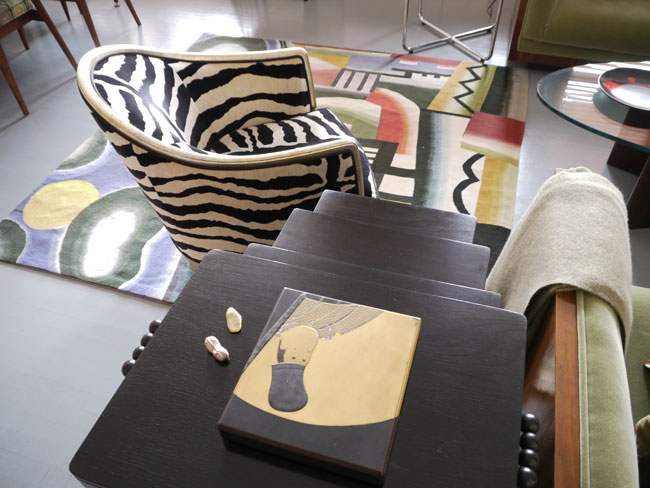
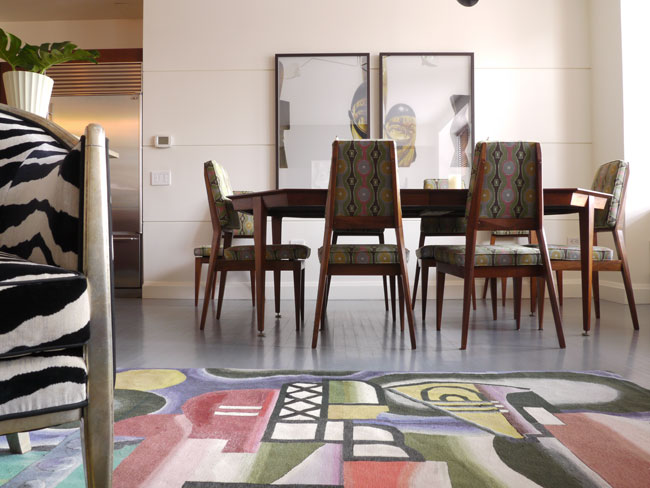
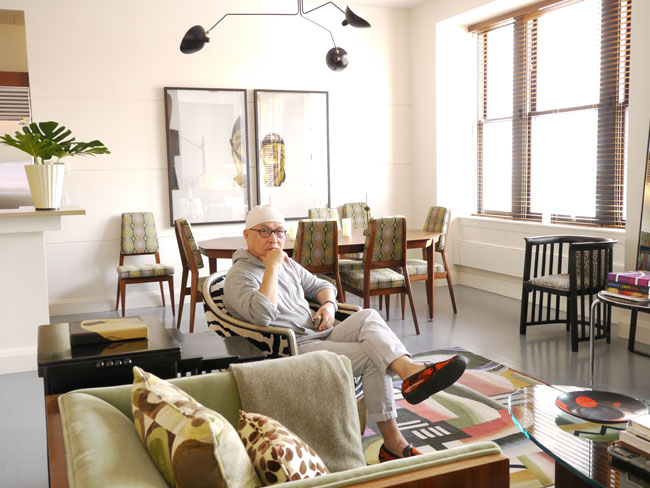
What kind of fabrics would sell in Japan—what is their taste?
Japan? Prints and all that—forget it. I’m talking about a high-level [of the society]—those who are aware. But when you look at the kids then anything goes—the apartments are bolder … a mish-mash of everything. They keep talking about the generation gap there but it’s got nothing to do with generations—good taste is good taste.
How would you describe your taste? What’s the difference between a mish-mash and a combination?
Taste. [Mine is] a combination of simplicity and a little bit of Western kind of art deco.
Are you often surprised at what sells and what doesn’t?
Always. Sometimes I feel in the gut something is going to do well and it does well whereas another thing is too sophisticated and it doesn’t sell so well.



How often do you go back to Japan?
Twice a year. I love it. I always go to the hot springs.
What aspect of living in America have you never quite accepted?
In New York it’s okay … the minute I have to go to book signings and all that, I feel it …
What do you feel?
I don’t know … I feel strange. Everything about it, the aesthetic … the little towns all look the same to me—ugly. People look at me … as if I’m from the planet Mars or something.